
Film photography is special in the age of AI
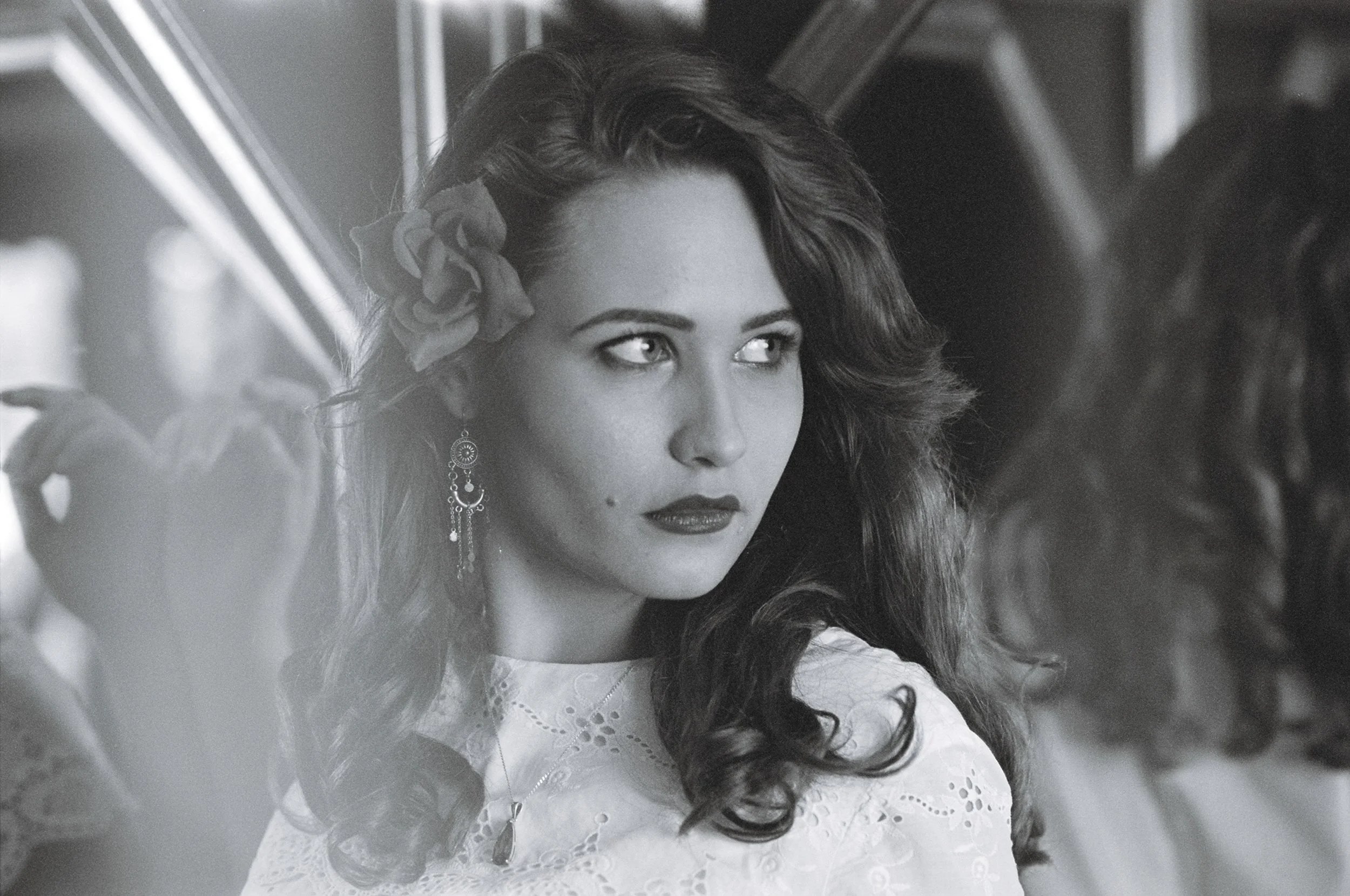
There’s nothing like a classic black and white film portrait.
How do you even know if a photo is real or not anymore? My mother asked me this the other day and as a professional photographer I told her most of the time, I can tell, but I have a trained eye. Then it hit me, there’s a certain type of photo I don’t AI will every truly be able to mimic because… well it’s not actually digital.
AI is never going to be able to truly replace or copy film photography.
I know exactly what you might say when you read that, “But I saw an AI image generator that puts you in an 80s film photo, and it mimics film”. Yes, these do exist, but those generators mimic film photography the way a bad snapchat/instagram filter puts glam makeup on your face. The eyebrow is in the wrong spot, the lipstick doesn’t move when your lips do, and the eyelashes somehow appear connected to your retina instead of your eyelid. All jokes aside, let’s actually breakdown exactly why these generators don’t truly mimic film and actually never will.
For starters the resolution of most AI image generators is around 1024 × 1024. It’s fine at a distance, but it’s going to look tiny and up close it’s going to potentially look fuzzy. Now 35 mm film doesn’t really have resolution in the same way digital images do. Technically, it has infinite resolution and can therefore be enlarged infinitely. Film instead has something called grain, and it’s the element in film photos that makes even the untrained eye simply know it was taken on film. Think of the tiny little specks making up shadows in film photos. That is the grain and 1024×1024 AI image generators can’t remotely compete with this type of “resolution”. Yes, some AI generators can do large resolutions… it’s still not going to remotely compare, especially if we bring something like medium format film into the conversation.
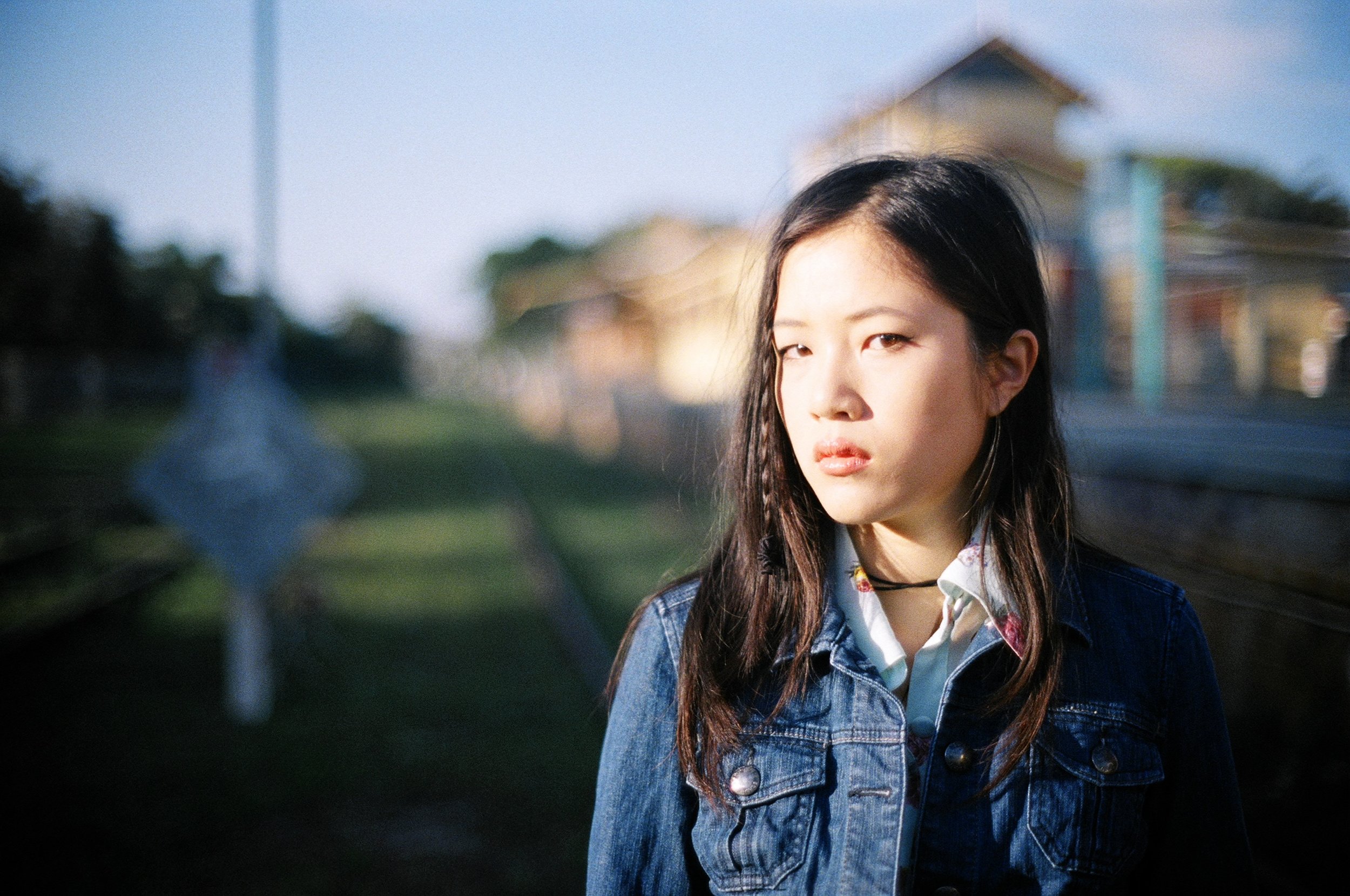
Film photo with grain.
The grain is especially obvious on facial shadows. Look at the shadow on her cheek and how it shows variation from light to dark shadow. There’s small grains making up that shadow. You can see the same concept in the image at the top of this article.
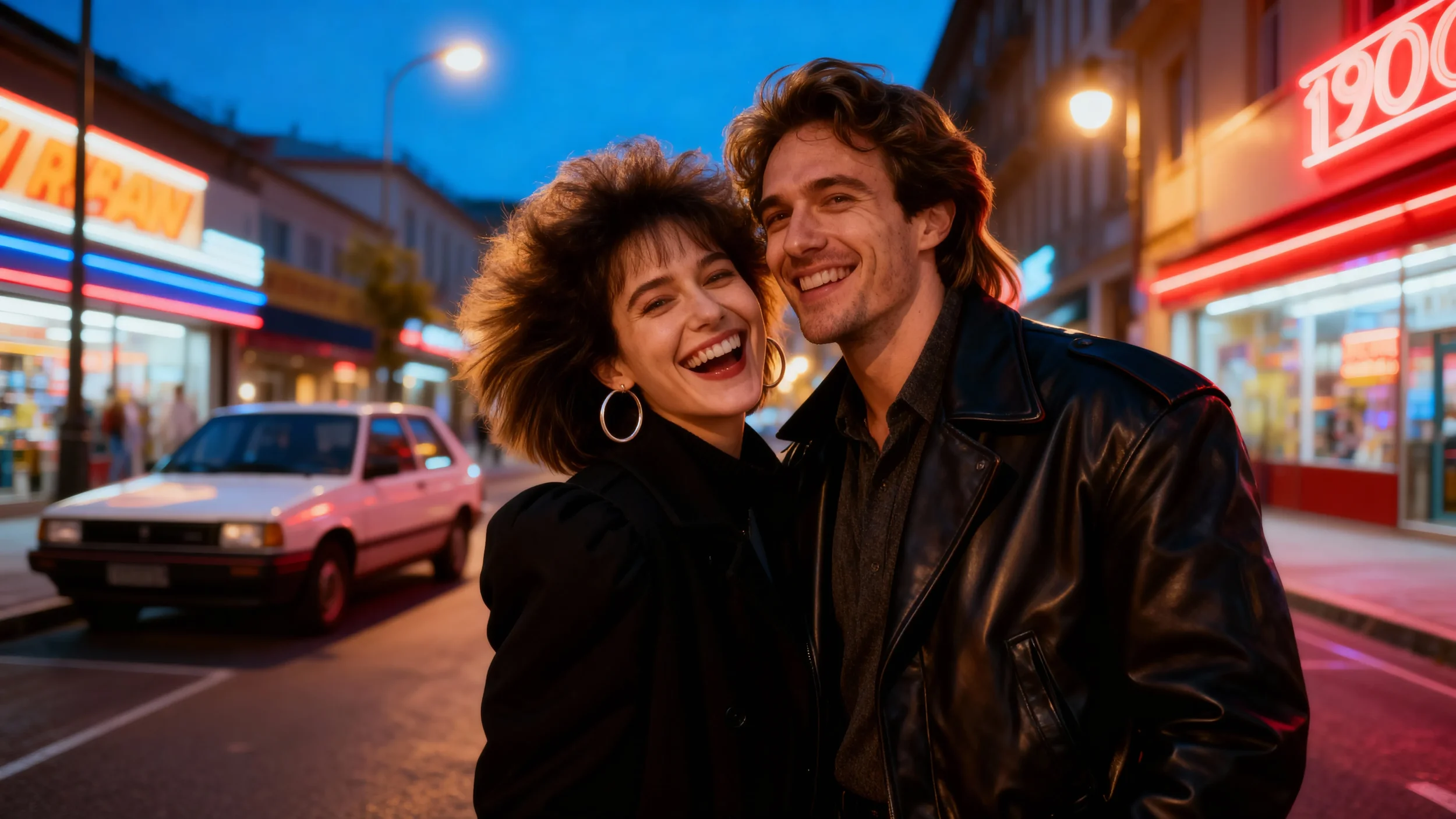
AI Generated 80’s “film” photo somehow missing the grain…aka what makes film look like film.
Notice how both their faces and the shadows in the background are much smoother than the actual film photo? There’s very little grain in this image. Overly smooth faces are usually a red flag something has been AI generated.
Now that we have highlighted the difference between grain and resolution, let’s get a little philosophical. Film is a real image. We can go to drugstore and buy a disposable kodak today. Take a few carefully timed photos since there’s only 27 images on the roll. Get it developed and then hold the image in our hand. We can hold it up to the light and peek at what it shows. We can even use an enlarger to project it on photo paper and create a physical print without ever touching a computer. Film is a physical media, and that’s what makes it so special in the age of AI.
No one can even hold an AI image. We can just hold the phone or laptop we typed the prompt into. If we want to print it we have to use a digital printer. We can mimic photography and put it on photo paper, but the image can’t be printed larger than 1024×1024 without getting fuzzy. Even digital photography can at least print massive high resolution images and someone actually took the image with a camera. We also can in fact hold the SD card that houses the image too. It would be pretty hard to hold the data center that generated the image, but maybe that’s just small minded haha.
Moving past the non-physical ephemeral nature of AI images, we have another important issue. Is writing a prompt considered a high art form the way film photography is? Will museums one day hang an AI generated image next to an Ansel Adams print of Monolith, the Face of Half Dome? Who will we list as the artist? The person who wrote the prompt, the billion dollar tech company who created the AI, or the coder who actually made any of this possible? If someone commissions a film photo it’s cut and dry that the artist is whoever took the photo. It was their very human nature that determined this image was art which inherently gave it value.
And what about the fact that the AI generators creating these “80s film” photos, were trained on the art of now countless photographers, some of whom probably have no idea their images were used for that? Did your dad know meta scraped his old film photos off facebook when he reminisced and uploaded them? Will AI credit these artists when, inevitably, some day a museum hangs a piece of AI art? It’s doubtful and something the art is currently grappling with. For God’s sake the pope event wrote “Magnifica Humanitas” to address this issue.
Film photo AI generators couldn’t exist without actual film photos. That says something about how special film photography is.
At the end of the day, film photography is special in the age of AI and by commissioning film portraits, like we offer for family photos and weddings clients are getting something that AI can never be. It’s been a huge motivation for our company to continue offering film photography upgrades to shoots. We aren’t keeping a dying artform alive by offering this. We are creating something truly unique and irreplaceable for our clients to cherish.
If you’re interested in commissioning film photography in Colorado, fill out one of our inquiry forms today. We would love to create lasting memories in an unparalleled media for you!
For more photography content subscribe to our newsletter or follow Lorikeet Weddings across social media!
And no…we didn’t write this article with AI haha. It took a photographer hours to organize her thoughts and not just scream into the abyss.